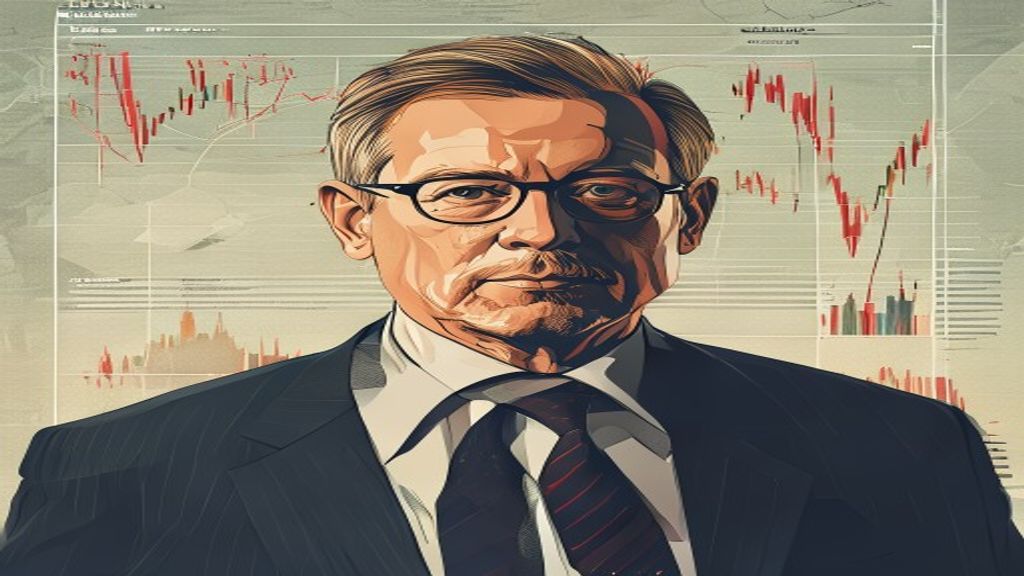
Kevin Warsh's Fed Leadership: Implications for Policy and Independence
The Federal Reserve held its policy meeting this week amid persistently high inflation, the impact of the Iran war on energy markets, and a new President awaiting Senate confirmation. Glenn Hubbard, former economic advisor to President George W. Bush and dean of Columbia Business School, assessed what the Fed's decision signals about the economy and what Kevin Warsh's future leadership could mean for the institution's purpose, strategy, and independence.
Hubbard noted that the current Fed decisions reflect a cautious stance in fighting inflation. He stated that high inflation and geopolitical risks have led the Fed to take careful steps in tightening monetary policy. He emphasized that volatility in energy prices, in particular, has further complicated the central bank's decisions.
If Kevin Warsh is appointed as Fed Chair, significant changes in the institution's policy structure are expected. Hubbard indicated that Warsh has a vision for a more transparent and accountable Fed, but this approach could create pressure on the institution's independence. Warsh is anticipated to adopt a more aggressive stance on inflation targeting and interest rate decisions.
The Fed's independence could become a point of debate under Warsh's leadership. Hubbard highlighted the importance of a central bank resistant to political pressures. He warned that Warsh might tend to collaborate more closely with Congress, but this could undermine the Fed's credibility.
In conclusion, Kevin Warsh becoming Fed Chair could be a critical turning point for fighting inflation and the direction of monetary policy. While markets expect tighter monetary policy and increased transparency with Warsh's appointment, preserving the institution's independence also stands out as a significant concern.
This is not investment advice.
The DXY is trading at 97.87, below its 20- and 50-day moving averages. While the RSI at 36.75 approaches oversold territory, the MACD remains in negative territory below the signal line. Kevin Warsh's candidacy for Fed leadership could increase expectations of a more hawkish monetary policy stance. In the near term, this may create downward pressure on the DXY, but the decline could be limited due to oversold conditions.
The S&P 500 (SPX) is in overbought territory with an RSI of 78.8, suggesting limited upside potential in the near term. Although the MACD remains positive and above its signal line, overbought conditions and news uncertainty could weaken upward momentum. The price is trading above its 20- and 50-day moving averages, but the distance from these levels increases the risk of a correction. News regarding Kevin Warsh's potential Fed leadership may create policy uncertainty, prompting a cautious market stance. In the short term, a sideways trend or a slight pullback appears more likely.
The NDX is in overbought territory with an RSI of 84.8, increasing the risk of a short-term correction or consolidation. The MACD remains positive and maintains an upward trend, but the overbought signal may limit the pace of the rally. The news headline points to potential policy changes led by the Fed, but it does not provide clear market direction as no concrete steps or immediate impacts are indicated. In the short term, upward momentum may continue, but caution is warranted regarding direction due to overbought levels and uncertain news effects.